(See Part 1 of the story here.)
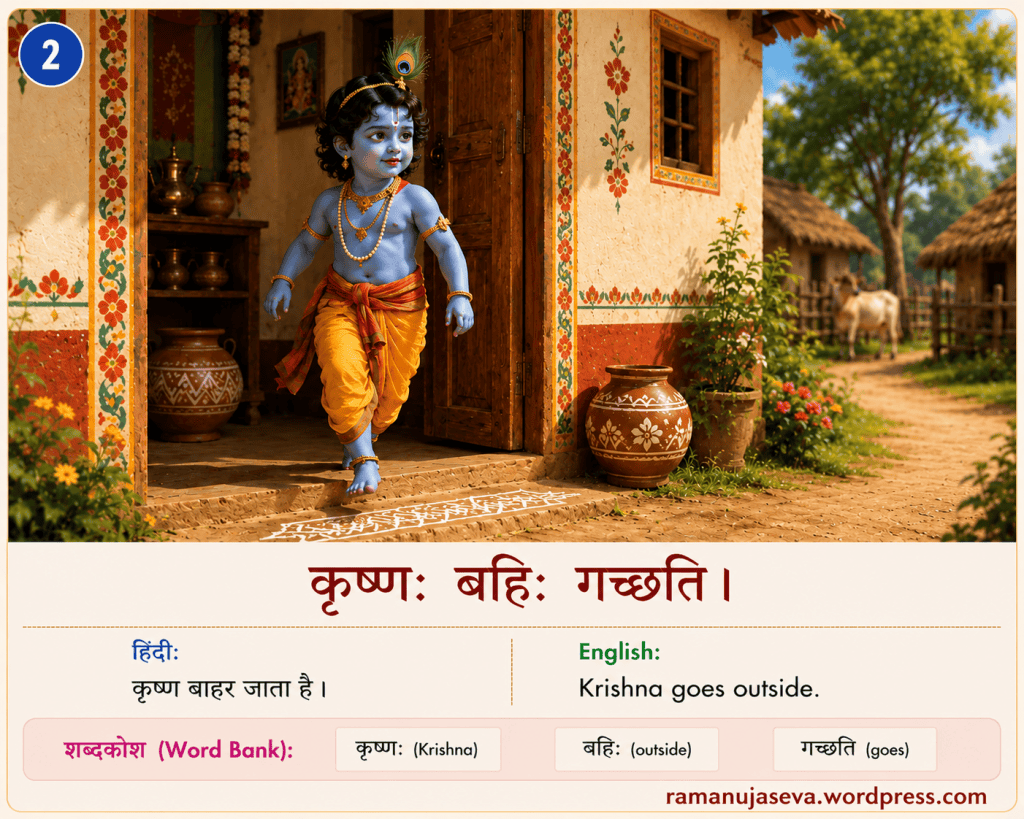
कृष्णः बहिः गच्छति। = Krishna goes outside.
Word-by-word meanings –
कृष्णः = Krishna
गच्छति = goes
बहिः = outside
कृष्ण is the subject (the doer) in this sentence. The action (the verb) is that of going (गच्छति).
The doer should be in प्रथमा विभक्तिः (nominative case). The प्रथमा विभक्तिः , एकवचनम् (nominative, singular) form of कृष्ण is कृष्णः . Hence that word is used in the sentence. (The two vertical dots after कृष्ण is called विसर्ग. )
कृष्णः is singular number. Therefore, the appropriate singular form of the verb should be used. (Subject-Verb agreement). The singular number, present tense form of the verb for ‘going’ is गच्छति (प्रथमपुरुष, एकवचन). Hence, गच्छति is used in our sentence.
Other similar examples:
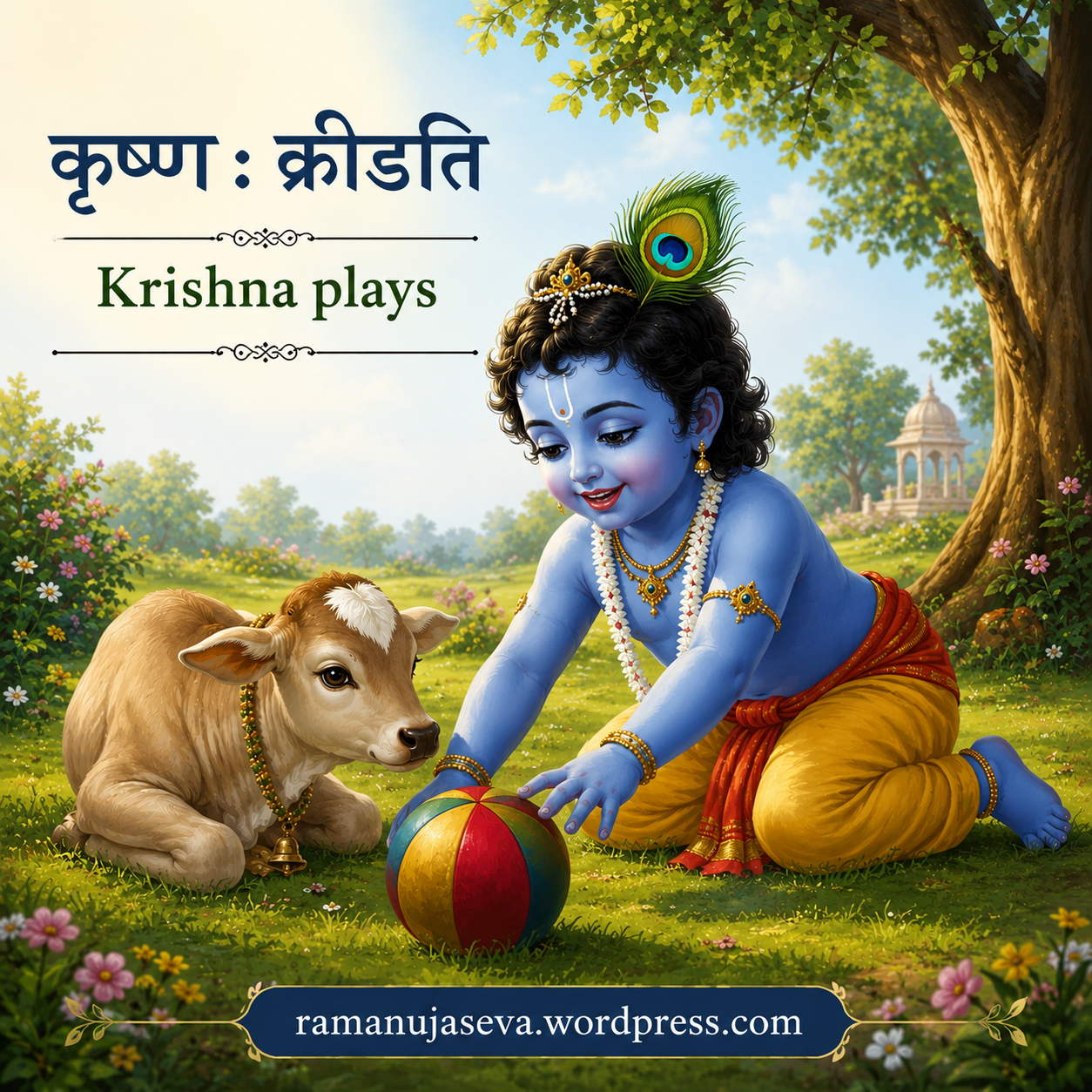
कृष्णः क्रीडति। = Krishna plays.
कृष्णः नृत्यति। = Krishna dances. 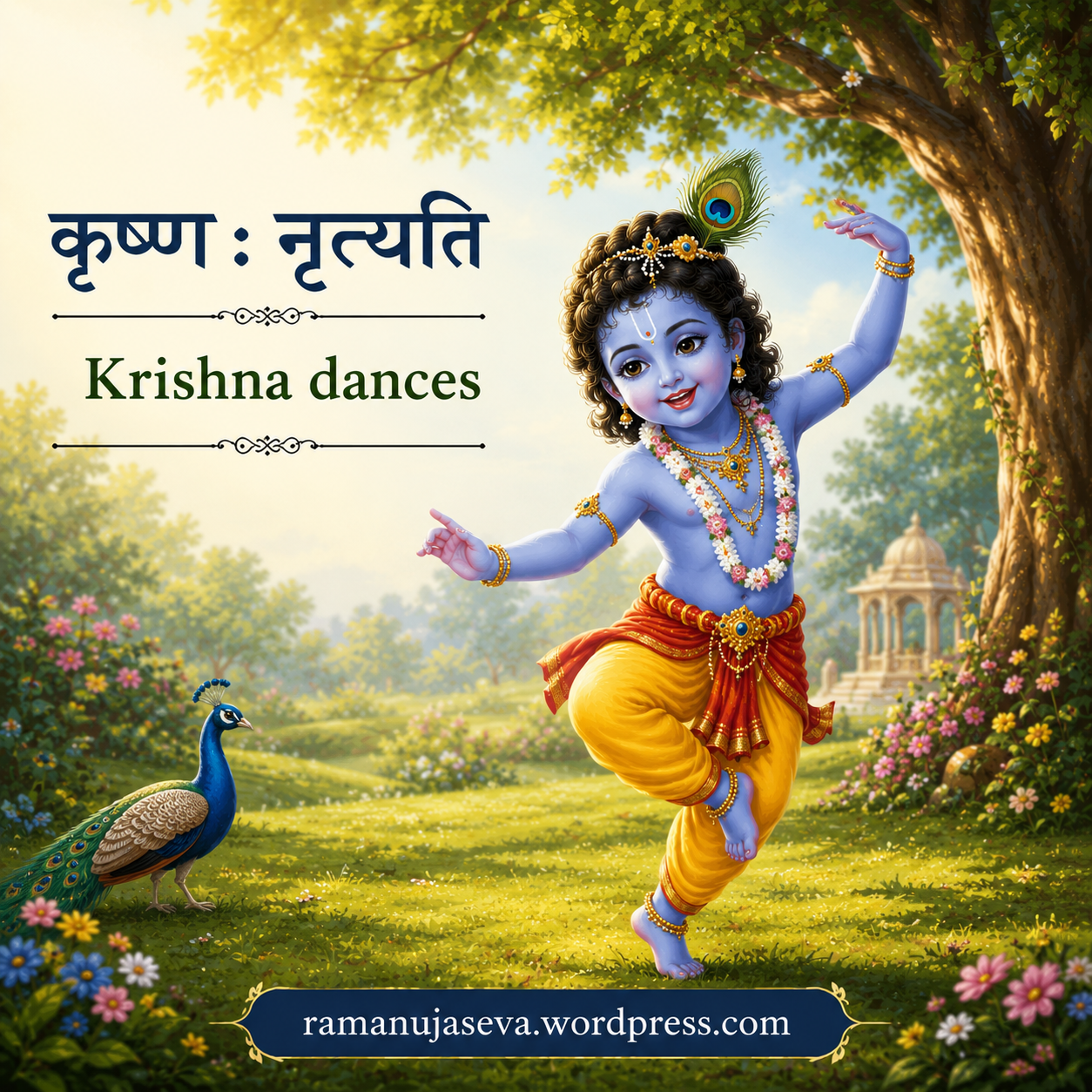
बालकः लिखति। = A/the boy writes.
बालिका पठति। = A/The girl studies.
If the subject (the doer) is dual number, then correspondingly the verb should also be in dual form (Subject-Verb agreement).
बालकौ लिखतः। = The two boys write. (बालकौ is the प्रथमा विभक्ति, द्विवचन form of बालक.)
गजौ चलतः। = The two elephants walk
Both बालक and गज are अकारान्त पुल्लिङ्ग (masculine gender words, ending in अ sound.)
| विभक्तिः | एकवचनम् | द्विवचनम् | बहुवचनम् |
|---|---|---|---|
| प्रथमा | बालकः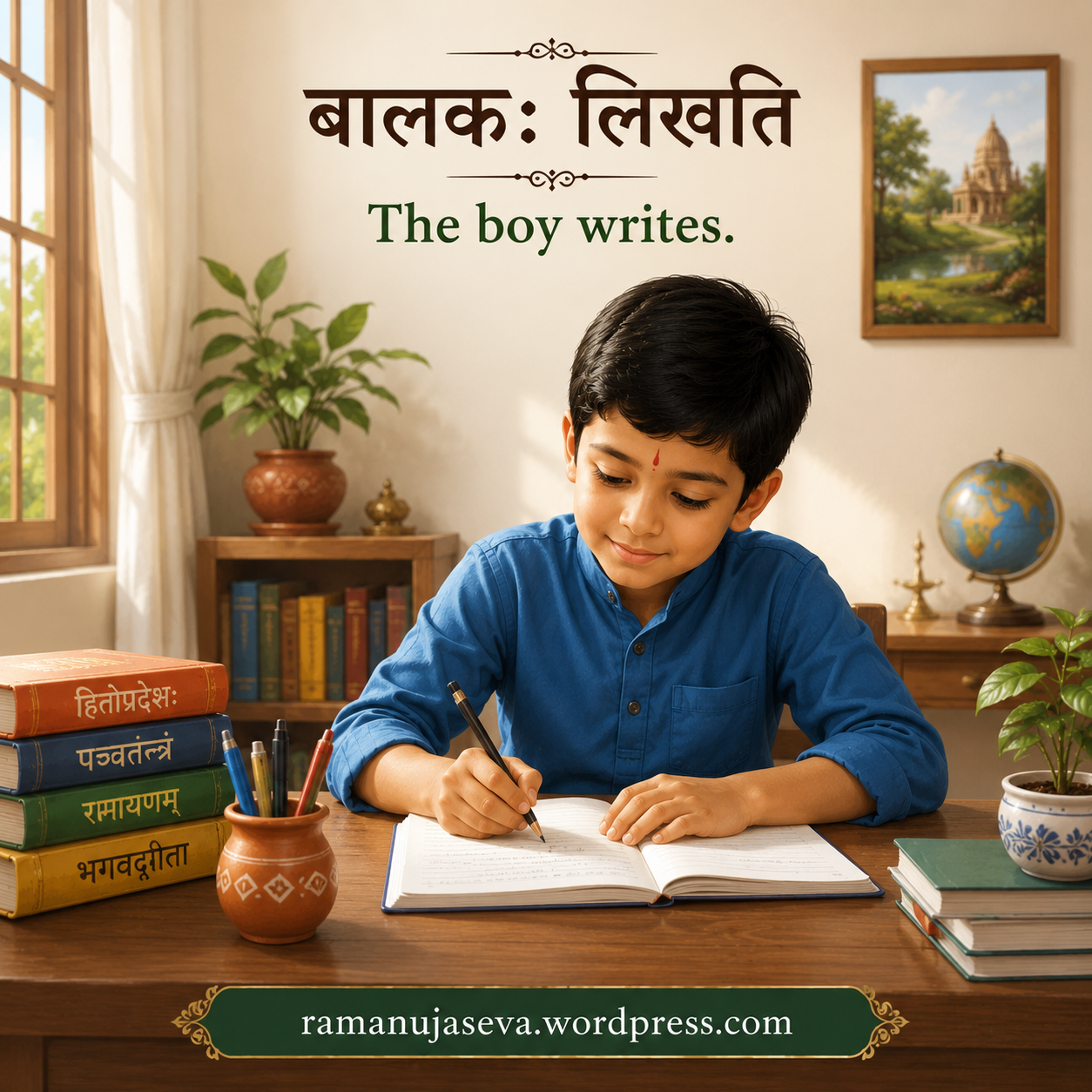 | बालकौ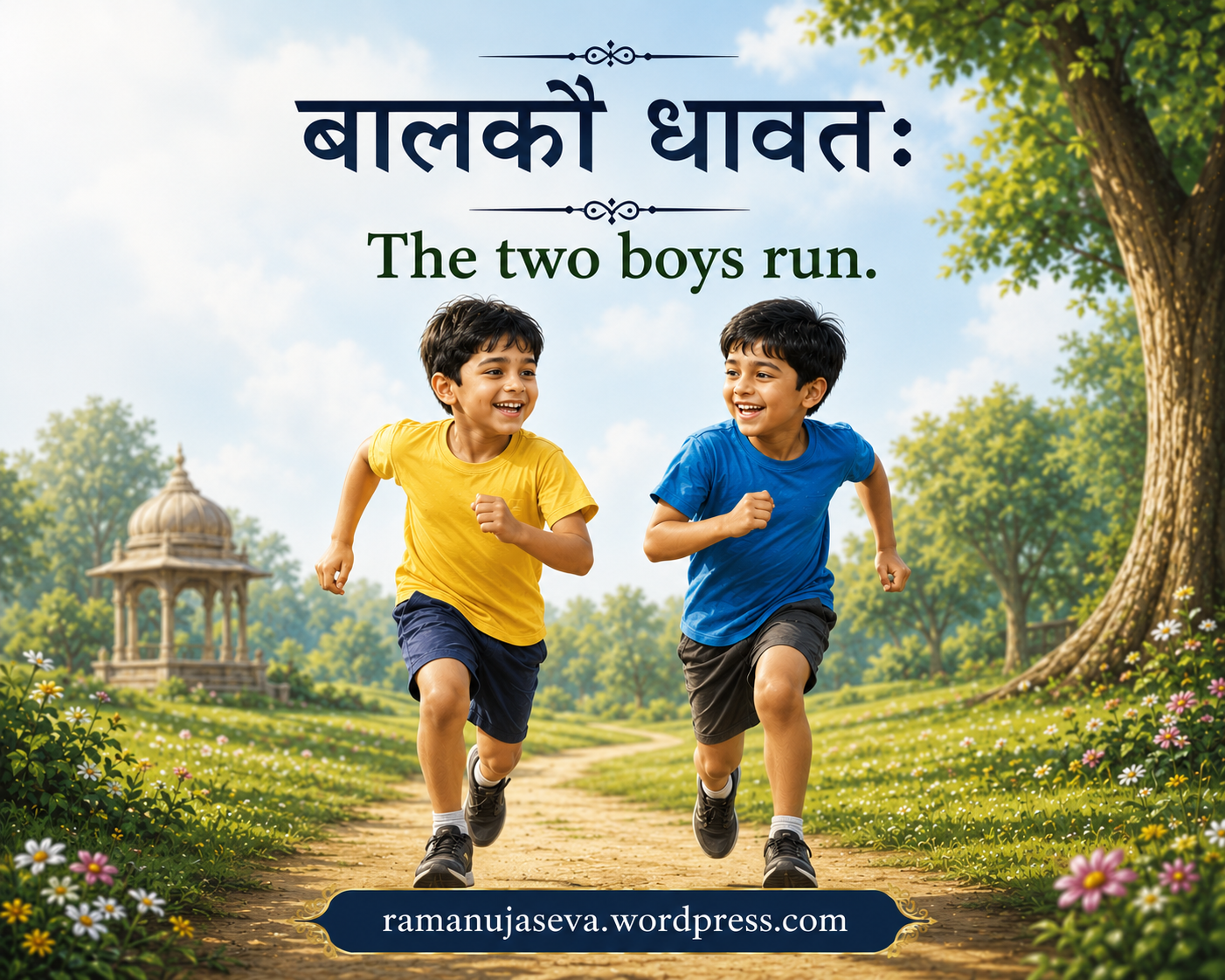 | बालकाः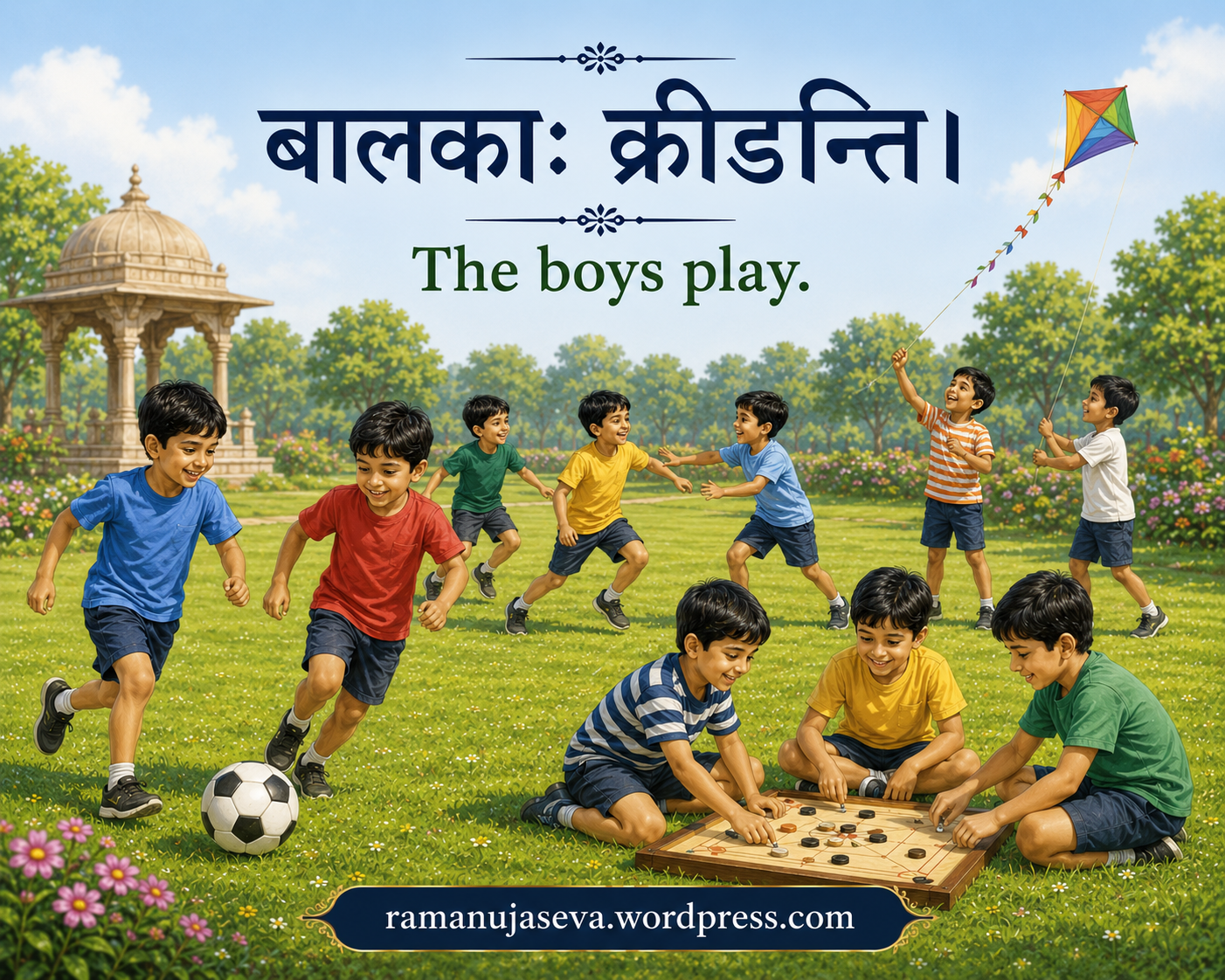 |
| विभक्तिः | एकवचनम् | द्विवचनम् | बहुवचनम् |
|---|---|---|---|
| प्रथमा | गजः | गजौ | गजाः |
बालिके क्रीडतः। = the two girls play. (बालिके is the प्रथमा विभक्ति, द्विवचन of बालिका.)
बालिके पठतः। = the two girls study.
बालिके गायतः। = the two girls sing.
बालिका.is आकारान्त स्त्रीलिङ्ग (feminine gender word, ending in आ sound.)
| विभक्तिः | एकवचनम् (singular) | द्विवचनम् (dual) | बहुवचनम् (more than two) |
|---|---|---|---|
| प्रथमा (doer/subject) | बालिका | बालिके | बालिकाः |
Similarly, if the doer is in plural number (बहुवचन) (more than 2), then correspondingly the बहुवचन form of the verb should be used.
बालकाः पिबन्ति। = The boys drink. (बालकाः is the प्रथमा विभक्ति, बहुवचन form of बालक)
बालकाः पश्यन्ति। = The boys see.
बालकाः क्रीडन्ति। = the boys play.
बालिकाः गच्छन्ति। = the girls go. (बालिकाः is the प्रथमा विभक्ति, बहुवचन form of बालिका)
बालिकाः आगच्छन्ति। = the girls come.
बालिकाः पठन्ति। = the girls study/read.
Verb forms of गम् dhaatu, meaning ‘to go’
3rd person, Present tense
| पुरुषः | एकवचनम् (singular) | द्विवचनम् (dual) | बहुवचनम् (more than 2) |
|---|---|---|---|
| प्रथमपुरुषः (3rd person) | गच्छति | गच्छतः | गच्छन्ति |
क्रीड् dhaatu (‘to play’)
| पुरुषः | एकवचनम् | द्विवचनम् | बहुवचनम् |
|---|---|---|---|
| प्रथमपुरुषः | क्रीडति | क्रीडतः | क्रीडन्ति |
पठ् dhatu (‘to read / to study’)
| पुरुषः | एकवचनम् | द्विवचनम् | बहुवचनम् |
|---|---|---|---|
| प्रथमपुरुषः | पठति | पठतः | पठन्ति |
End of lesson. Hope you found it useful.
 sri ramanuja seva
Leave a comment