In this post, we have:
- few sentences about Sri Rama.
- Grammatical analysis of a couple of them
- शब्दरूप tables for सीता and राम
- धातुरूप table for अस् धातु in present tense
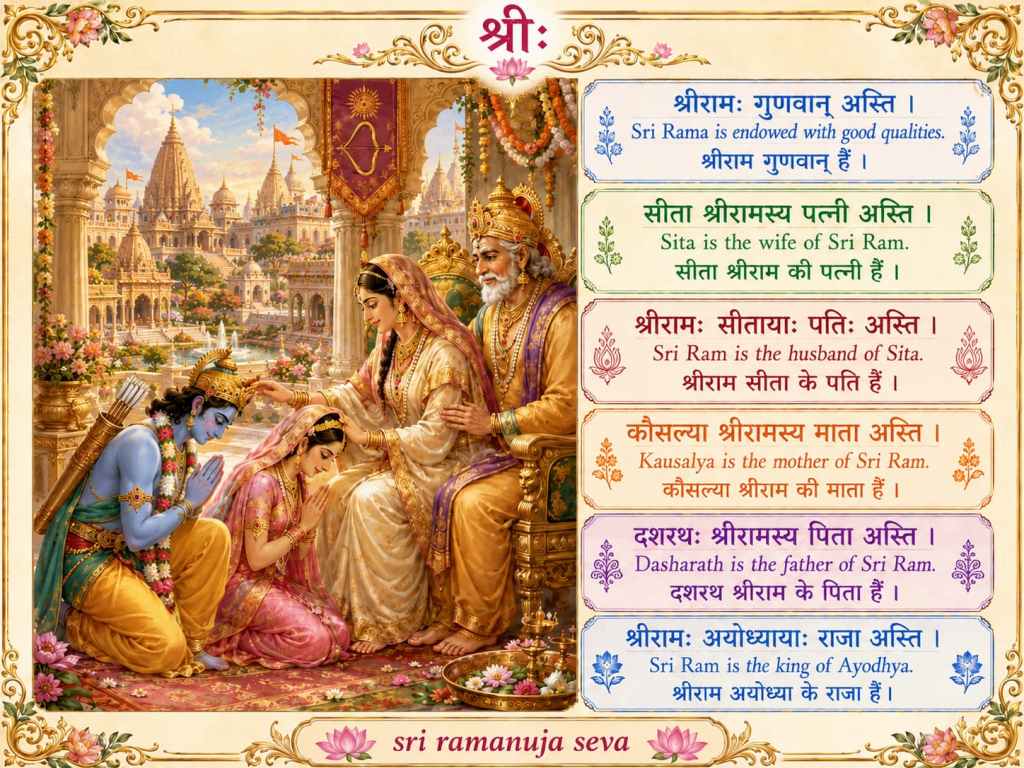
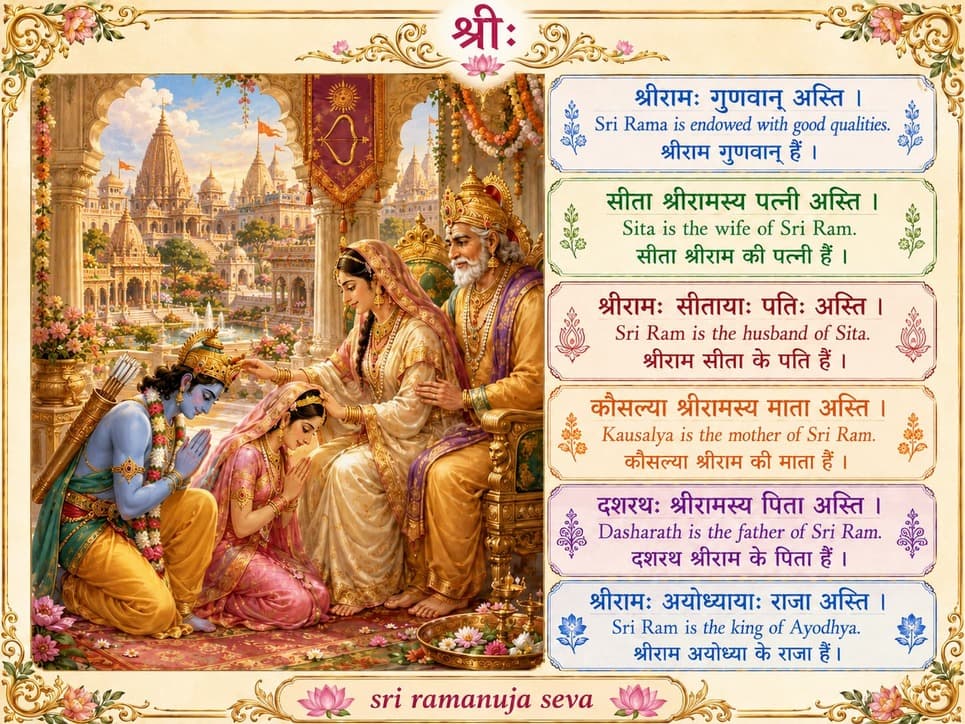
श्रीरामः गुणवान् अस्ति । Sri Rama is endowed with good qualities. श्रीराम गुणवान् हैं ।
सीता श्रीरामस्य पत्नी अस्ति । Sita is the wife of Sri Ram. सीता श्रीराम की पत्नी हैं ।
श्रीरामः सीतायाः पतिः अस्ति । Sri Ram is the husband of Sita. श्रीराम सीता के पति हैं ।
कौसल्या श्रीरामस्य माता अस्ति । Kausalya is the mother of Sri Ram. कौसल्या श्रीराम की माता हैं ।
दशरथः श्रीरामस्य पिता अस्ति । Dasharath is the father of Sri Ram. दशरथ श्रीराम के पिता हैं ।
श्रीरामः अयोध्यायाः राजा अस्ति । Sri Ram is the king of Ayodhya. श्रीराम अयोध्या के राजा हैं।
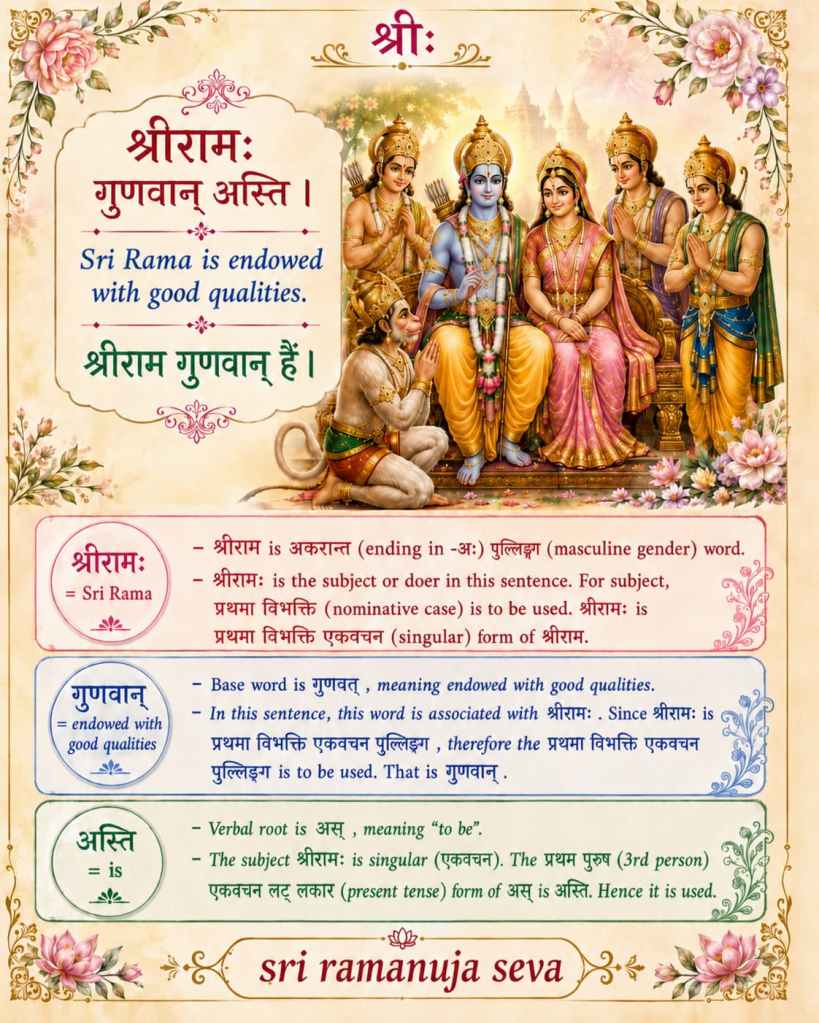
श्रीरामः गुणवान् अस्ति । Sri Rama is endowed with good qualities. श्रीराम गुणवान् हैं ।
- श्रीरामः = Sri Rama
- श्रीराम is अकारान्त (ending in -अ) पुल्लिङ्ग (masculine gender) word. श्रीराम is the subject or doer in this sentence. For subject, प्रथमा विभक्ति (nominative case) is to be used. श्रीरामः is प्रथमा विभक्ति एकवचन (singular) form of श्रीराम.
- गुणवान् = endowed with good qualities
- Base word is गुणवत् , meaning endowed with good qualities.
- In this sentence, this word is associated with श्रीरामः . Since श्रीरामः is प्रथमा विभक्ति एकवचन पुंल्लिङ्ग , therefore the प्रथमा विभक्ति एकवचन पुंल्लिङ्ग is to be used. That is गुणवान् .
- अस्ति = is
- Verbal root is अस् , meaning “to be”.
- The subject श्रीरामः is singular (एकवचन). The प्रथम पुरुष (3rd person) एकवचन लट् लकार (present tense) form of अस् is अस्ति. Hence it is used.
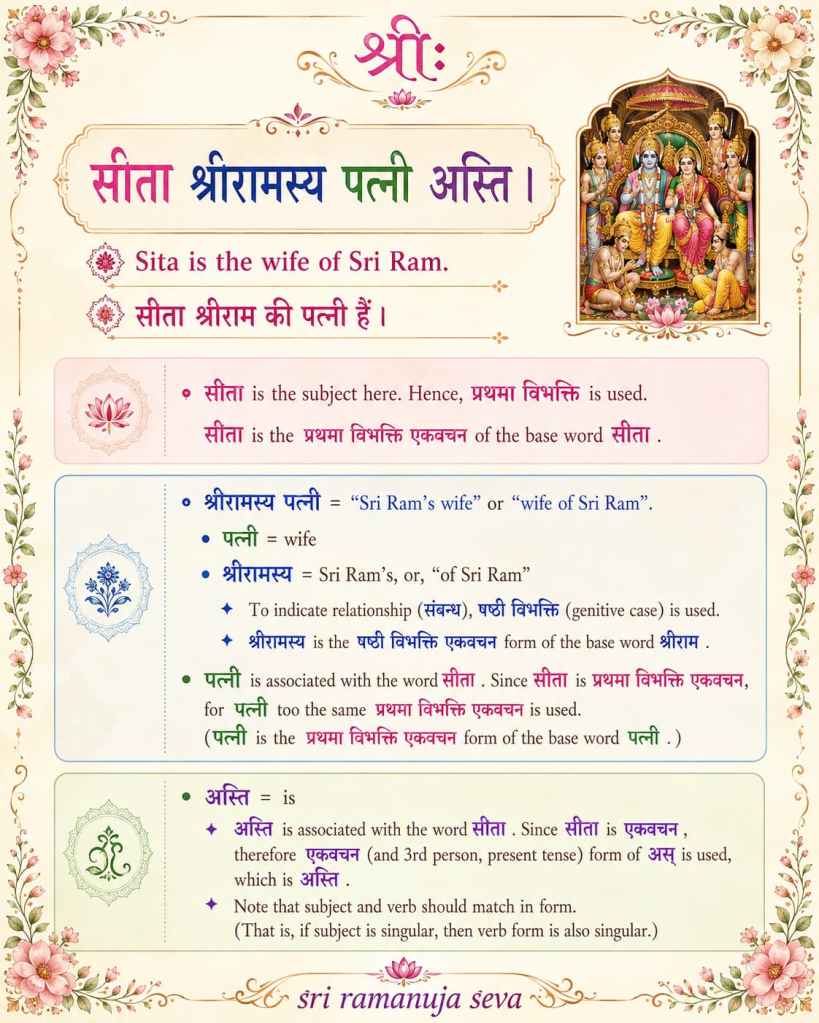
सीता श्रीरामस्य पत्नी अस्ति । Sita is the wife of Sri Ram. सीता श्रीराम की पत्नी हैं ।
- सीता is the subject here. Hence, प्रथमा विभक्ति is used. सीता is the प्रथमा विभक्ति एकवचन of the base word सीता .
- श्रीरामस्य पत्नी = “Sri Ram’s wife” or “wife of Sri Ram”.
- पत्नी = wife
- श्रीरामस्य = Sri Ram’s, or, “of Sri Ram”
- To indicate relationship (संबन्ध), षष्ठी विभक्ति (genitive case) is used.
- श्रीरामस्य is the षष्ठी विभक्ति एकवचन form of the base word श्रीराम .
- पत्नी is associated with the word सीता . Since सीता is प्रथमा विभक्ति एकवचन, for पत्नी too the same प्रथमा विभक्ति एकवचन is used. (पत्नी is the प्रथमा विभक्ति एकवचन form of the base word पत्नी .)
- अस्ति = is
- अस्ति is associated with the word सीता . Since सीता is एकवचन , therefore एकवचन (and 3rd person, present tense) form of अस् is used, which is अस्ति .
- Note that subject and verb should match in form. (That is, if subject is singular, then verb form is also singular.)
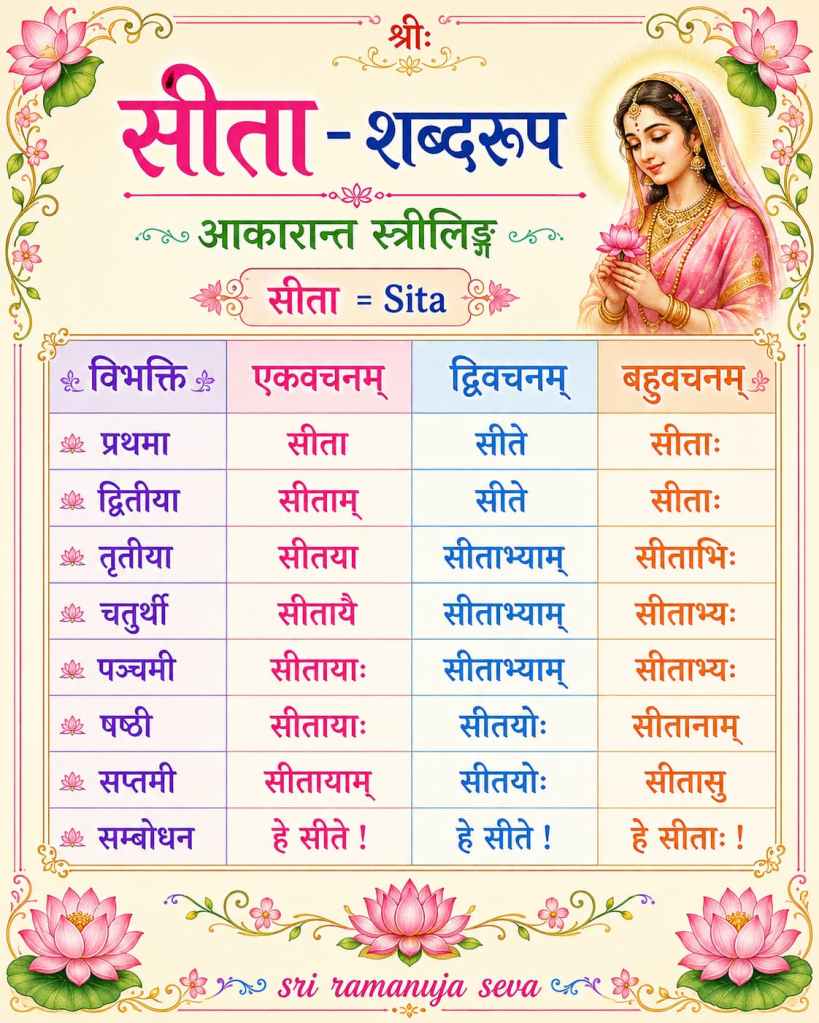
सीता-शब्दरूप
आकारान्त स्त्रीलिङ्ग
सीता = Sita
| विभक्ति | एकवचनम् | द्विवचनम् | बहुवचनम् |
|---|---|---|---|
| प्रथमा | सीता | सीते | सीताः |
| द्वितीया | सीताम् | सीते | सीताः |
| तृतीया | सीतया | सीताभ्याम् | सीताभिः |
| चतुर्थी | सीतायै | सीताभ्याम् | सीताभ्यः |
| पञ्चमी | सीतायाः | सीताभ्याम् | सीताभ्यः |
| षष्ठी | सीतायाः | सीतयोः | सीतानाम् |
| सप्तमी | सीतायाम् | सीतयोः | सीतासु |
| सम्बोधन | हे सीते ! | हे सीते ! | हे सीताः ! |
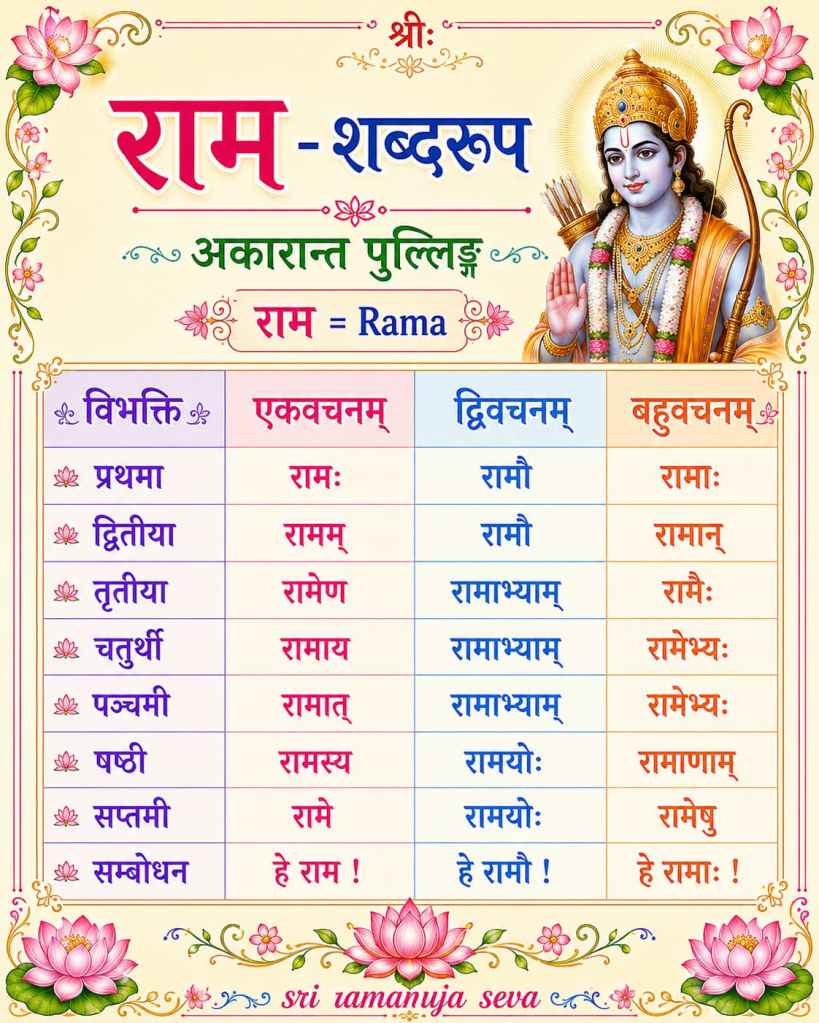
राम-शब्दरूप
अकारान्त पुंल्लिङ्ग
राम = Rama
| विभक्ति | एकवचनम् | द्विवचनम् | बहुवचनम् |
|---|---|---|---|
| प्रथमा | रामः | रामौ | रामाः |
| द्वितीया | रामम् | रामौ | रामान् |
| तृतीया | रामेण | रामाभ्याम् | रामैः |
| चतुर्थी | रामाय | रामाभ्याम् | रामेभ्यः |
| पञ्चमी | रामात् | रामाभ्याम् | रामेभ्यः |
| षष्ठी | रामस्य | रामयोः | रामाणाम् |
| सप्तमी | रामे | रामयोः | रामेषु |
| सम्बोधन | हे राम ! | हे रामौ ! | हे रामाः ! |
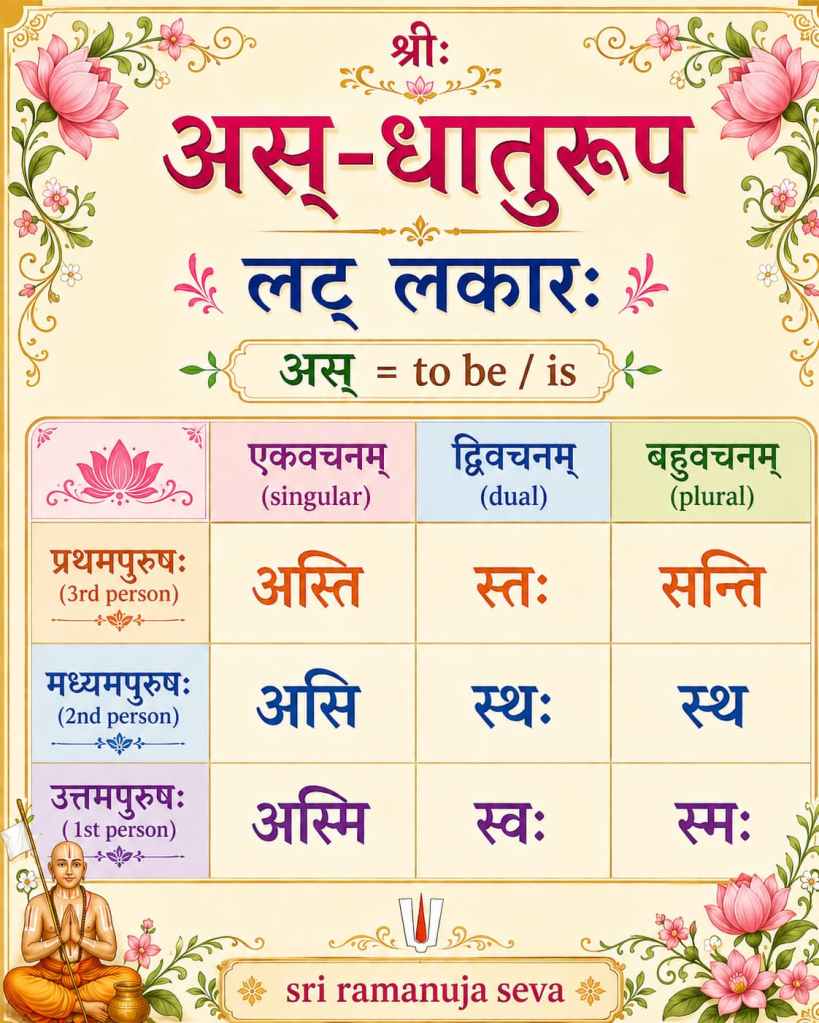
अस्-धातुरूप
लट् लकारः — Present Tense
अस् = to be
| पुरुषः | एकवचनम् (Singular) | द्विवचनम् (Dual) | बहुवचनम् (Plural) |
|---|---|---|---|
| प्रथमपुरुषः (3rd person) | अस्ति | स्तः | सन्ति |
| मध्यमपुरुषः (2nd person) | असि | स्थः | स्थ |
| उत्तमपुरुषः (1st person) | अस्मि | स्वः | स्मः |
Meanings
- अस्ति = he/she/it is
- स्तः = they two are
- सन्ति = they are
- असि = you are
- स्थः = you two are
- स्थ = you (more than two) are
- अस्मि = I am
- स्वः = we two are
- स्मः = we (more than two) are
For more similar posts, you can see here: Simple sentences about school
 sri ramanuja seva
Leave a comment